
Think Destination, Do it Different, Grow Participation
by Mark Jardine 7 Jul 18:30 BST
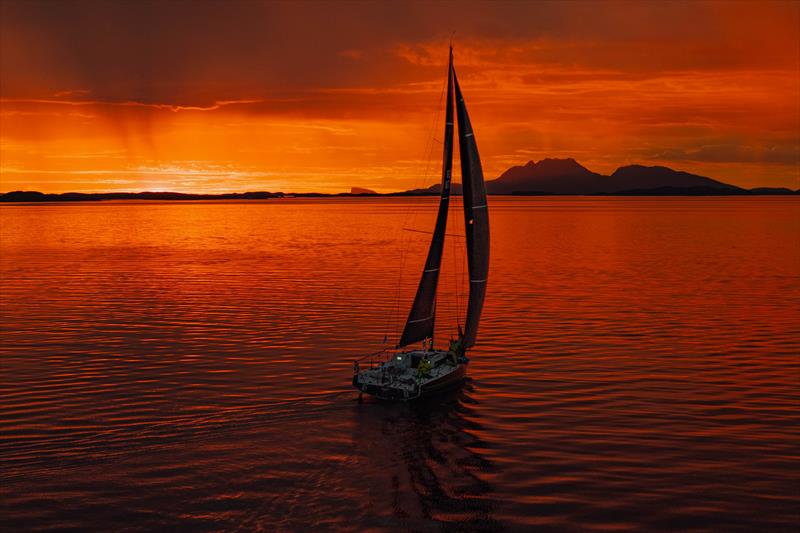
Race to the Arctic Reaches the Helgeland Coast © Race to the Arctic – SailLogic Media
Attending and reporting on a myriad of events - which has admittedly eaten into my own sailing time - does give a unique perspective on what is working and what isn't in this day and age. Habits have changed, lifestyles are very different, and time seems to be a commodity in short supply for most people, while travel costs have also increased significantly.
For the sailing world, this all has an impact. Like it or not, getting set up and prepared for an event and then committing to go to it can be tricky. A lot needs to be arranged in advance, and if you're not regularly attending open meetings, the planning stage takes a lot longer and feels harder.
Those who are regularly on the regatta circuit are well-prepared. Dinghies stay on the trailer with under and over cover on, ready to be unwrapped for a weekend's sailing, or given a final fettle ahead of a championship week. Campaigning yacht sailors have their regular team sorted and their entries in for the major events well ahead of time. They're in the habit, and racing is a major part of their lifestyle. Sailing is better off for these people, and I take my hat off to their commitment to the sport. Thank you.
For everyone else, travelling to events has become something where they pick and choose carefully. Often an event needs to tick a number of boxes to make the grade. This of course isn't fair on event organisers, whose primary goal is to provide great racing for a fleet, but it is increasingly the reality facing us. Effectively, sailing events need to be a holiday as well as a serious competition.
On the participation side, some events are declining while others are absolutely thriving.
An example of an event going from strength to strength is the Lord Birkett Memorial Trophy at Ullswater, the second-largest and arguably the most beautiful lake in the English Lake District. The 64th running of the event took place over the weekend, and the 230-boat entry limit was reached in record time.
It is no ordinary regatta, with a single race each day starting from Ullswater Yacht Club, which is nestled on the eastern shore, close to the northern end of the lake, with the entire fleet of 230 boats on a single startline, sailing south to round one of the islands near Glenridding, before heading north to a rounding mark at the Pooley Bridge end of the lake and heading to the finish. It's around fourteen miles all in all, and the surrounding hills, together with the meandering shape of the lake, make it a serious challenge.
I haven't competed in the event since the late '90s, when I sailed a Laser 5000 there, and you can go from twin wiring, spilling wind from the rig, to standing in the middle of the boat in a flat calm in an instant. It makes it all the more impressive that Matty and James Lyons won for the third time in a 49er. You come ashore tired but exhilarated, happy to have completed the challenge while also fulfilled from taking in the stunning surroundings.
At times it's tricky to concentrate solely on the sailing as you realise where you are, surrounded by the rolling hillsides and rocky peaks, but you really do have to keep your wits about you with 229 other boats on the water, and shifting winds that can come from literally anywhere.
The event is popular because it isn't the same old, same old. It's a different kind of sailing, with different skills required, and it makes for a truly memorable weekend. You go away from it wanting to come back for more, and once you've done it once, you can proudly say 'I've done the Birkett'. Sailors are wanting something different, and this event has it in spades.
Another event which caught my eye last week was the inaugural Island Offshore Race to the Arctic - a 750-nautical mile double-handed sailing challenge spanning four legs along the spectacular Norwegian coast.
The organisers had no idea what the response would be like, but were soon overwhelmed with entries, reaching the maximum 60 yachts in just 17 days and having to open a waiting list.
As Sigmund André Hertzberg, Chairman of Shorthanded Sailing Norway who organised the event, said back in December, "The regatta has received an enormous response in the community, both internationally and here at home in Norway. We had hoped for 30 boats at the start, but now we are already over 60. This is a dream come true."
The race started in Mandal, with Leg 1 taking the fleet past the Lindesnes Lighthouse with a finish at the island Fedje. Then leg 2 crossed the rough waters of Stad and Hustadvika to the finish in Kristiansund, before Leg 3 - the longest - headed to Sandnessjøen, located in the Helgeland region, before the final stretch of Leg 4 to Svolvær in the Lofoten Islands, which is within the Arctic Circle.
Some of the photography from this race was simply stunning, and taking part must have been awe-inspiring. Like with the Birkett, competitors can say 'I've raced to the Arctic'. Yes, it's on a different scale, but they're both achievements to be proud of. Both events are showing that racing with a specific goal in mind is hugely important.
While winning any event is huge, and those who won the Birkett and the Race to the Arctic are rightly lauded, these events have appeal to those who aren't going to be on the podium and are happy just to be there. The competition side of sailing events is vital, but to have big events we need to make sure the appeal runs all the way down the fleet. To do this, events need to be memorable and provide something unique.
I can't even count the number of regattas I've been to where all I did or saw was windward-leeward racing; this does provide a nice and even race course, but I do believe something unique is needed to provide a focal point. This isn't a new concept, with classes like the Firefly (celebrating its 80th anniversary this year) having the Sir Ralph Gore Challenge Cup on the Wednesday of their championship week. It is a single 10 to 12 nautical mile long-distance race and has a coveted status within the class.
I'll be reporting daily from the Firefly Championship at Tenby this year, where a fleet of 120 boats are set to race, and finding out what the enduring appeal of the class is will be a key part of my questions to the sailors. One thing's for sure, it's going to be quite a party!
Do send me an email about your favourite events, and why you go back to them year after year. Are you one of the open meeting regulars, or do you pick and choose? What are the factors that help you decide which regattas to do and which ones to avoid?
The more we can learn from successful events, the more we can help other events boost their participation. Sailing is unique, and proving unique and memorable challenges for sailors means it can be enjoyed on many levels.
Mark Jardine
Sail-World.com and YachtsandYachting.com Managing Editor