
Race for Water's Ocean & Climate Odyssey deploys the Posidonia Connect Project
by Race for Water 29 Apr 08:39 BST
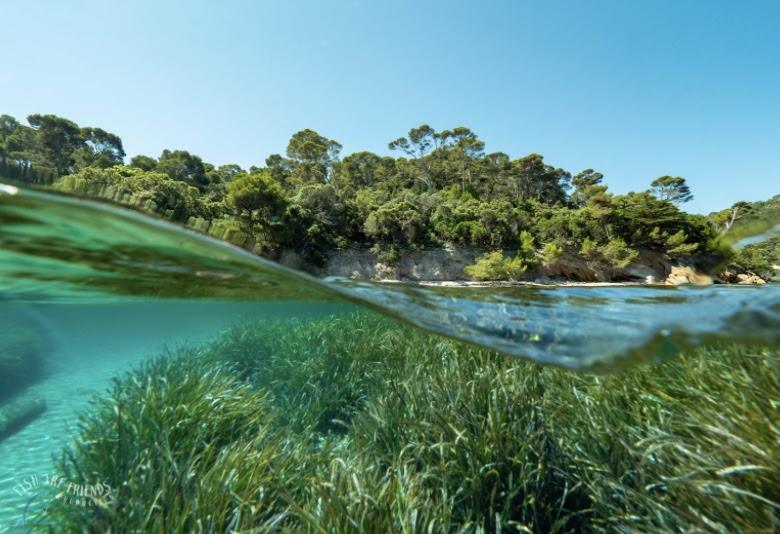
Race for Water's Ocean & Climate Odyssey deploys the Posidonia Connect Project © Race For Water
The Race for Water Foundation, a pioneer in ocean exploration aboard revolutionary vessels, continues its Ocean & Climate Odyssey, an ambitious global expedition extending until 2030.
Dedicated to understanding the links between the ocean, climate, and biodiversity, this adventure marks a significant new step with the launch of the Posidonia Connect project. From May 5 to May 28, 2026, the zero-emission catamaran MODX 70 will depart from Marseille for its first international mission in Italy, aiming to strengthen the protection of Posidonia oceanica meadows.
The Ocean & Climate Odyssey: Transforming Knowledge into Action
Since 2025, Race for Water has deployed its missions aboard the MODX 70, a pioneering catamaran combining solar energy, hydro-generation, and automated retractable wing sails, ensuring silent, zero-emission navigation. Beyond the decarbonization of maritime transport, the Ocean & Climate Odyssey is mandated to investigate the field with scientific experts to better understand the ocean's essential role in climate regulation and the preservation of life, alert decision-makers, and promote sustainable solutions. Posidonia Connect fully aligns with this vision: it is not just about observing ecosystem decline but co-constructing robust management tools to better preserve them.
French Expertise Serving the Mediterranean: The Role of GIS Posidonie
This project stems from a fruitful collaboration between the Race for Water Foundation and the GIS Posidonie. Created in 1982 at the initiative of the French Ministry of Environment and Port-Cros National Park, the GIS Posidonie is a non-profit organization specialized in the Mediterranean coastal marine environment, particularly Posidonia oceanica seagrass meadows. Within the framework of the Marha (Marine Habitats) project supported by the European LIFE program, the GIS Posidonie has deployed an ecosystem-based indicator, the EBQI (Ecosystem-based Quality Index). This method, developed by the Mediterranean Institute of Oceanology (MIO) based in Marseille, has been implemented along the entire French Mediterranean coast and on several iconic ecosystems, such as the Posidonia oceanica seagrass meadows. Unlike classical monitoring that focuses solely on the plant structure or health, the EBQI evaluates the ecosystem in its entirety: plant vitality, as well as communities of invertebrates, fish assemblages, sea birds, and their ecological interactions. This holistic approach is essential to obtain a faithful image of marine health and guide conservation policies at local (marine protected area, local collectivities), national and international level (EU Directives, Barcelona convention).
Why Italy? Testing Protocol Robustness
Italy, hosting nearly 20% of Mediterranean seagrass meadows, constitutes the ideal testing ground to validate the transferability of the EBQI where environmental conditions are distinct from the French coast: more oligotrophic waters (low in nutrients) and higher mean sea surface temperatures. These factors shape specific biological communities. By deploying the EBQI in Sardinia and the Gulf of Naples, the mission aims to adapt this tool to Mediterranean diversity, creating a common standard to assess the "Good Environmental Status" required by the Marine Strategy Framework Directive (MSFD) as well as the Barcelona convention.
An Excellence Partnership
The expedition brings together experts from the GIS Posidonie, the University of Sassari (Sardinia), and the Stazione Zoologica Anton Dohrn (Naples). Together, they will analyze up to a dozen sites, starting with a first phase of study in Sardinia focusing on the preserved sites of the Marine Protected Areas (MPAs) of Asinara, Capo Testa, and Tavolara. The mission will then continue to the Gulf of Naples to study the Regno di Nettuno MPA in Ischia (a protected area and natural laboratory for the effects of acidification linked to volcanic CO2 emissions), the Punta Campanella MPA near Sorrento (tourist pressure), and Bacoli (a degraded site).
Citizen and Scientific Mobilization Through Stops
Beyond research, the Posidonia Connect project is a major vector for awareness. School visits are planned on board in Porto Torres, Ischia, and during the stopovers in Marseille, (May 5-6), Naples (May 22) and Toulon (May 27-28), where public conferences will also be organized to mobilize citizens and local decision-makers on ocean issues.
Furthermore, during scientific diving days, "Posidonia Talks" sessions will be organized on board, offering a direct exchange space between scientists, marine protected area managers, the private sector, and media on concrete solutions to preserve Posidonia.
A Long-Term Ambition: Covering the Entire Basin
This first mission in Italy is just the beginning of a larger project. Our ambition is to cover, in the coming years, several strategic zones of the Mediterranean Basin, such as the Balearic Sea, the Alboran Sea, the Adriatic Sea, the Ionian Sea, the Aegean Sea, and the Levantine Basin.