
The complete package
by Mark Jardine 5 Jan 20:00 GMT
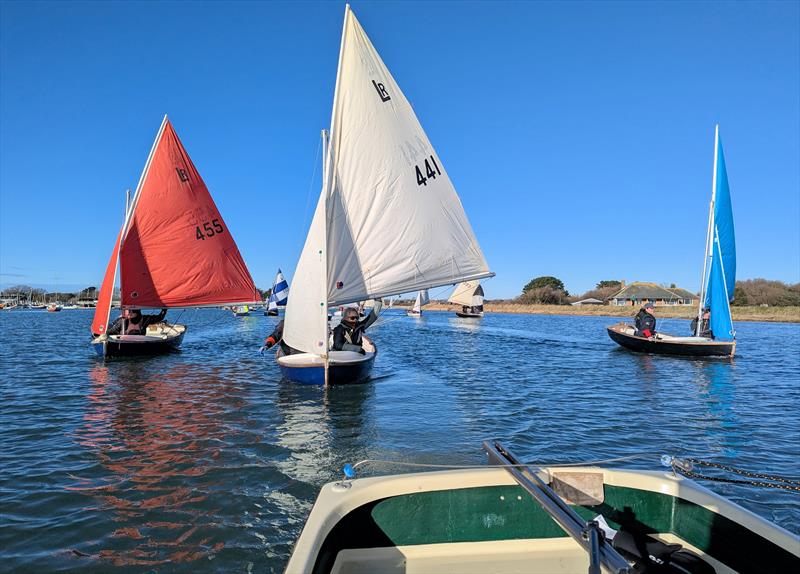
Scow fleet during the Keyhaven Yacht Club Rum Race © Mark Jardine
I'm a great believer in starting things on the right foot. Be that in the morning, going for a run (even though it was damn chilly this morning) to set yourself up for the day, or preparing ahead for a meeting so that you've got the facts and figures to hand when asked.
Sunday's race at Keyhaven Yacht Club, which many regular readers will know is my local club, definitely set things up nicely for 2026 and the season ahead. Despite the sub-zero temperatures, the 'Rum Race' was well supported with 31 boats on the water, combined with a healthy bunch of spectators along the seawall, while the delicious lunch served afterwards saw the club packed with happy sailors and many more besides.
If this is a sign of things to come, then the year ahead is going to be a cracker on the water and for the club itself and, as with all things, it isn't just one element which decides the fortunes of a club, class or event, but a myriad of factors coming together. You then have the complete package.
Sailing in January in the UK can kindly be described at best as 'unpredictable'. Sometimes it's blowing 45 knots with horizontal rain, and sometimes it's bitterly cold and windless. This year we were lucky, as while we had to crack the ice out of the bottom of our boats, and pull the ice out of the odd ILCA mast step, it could have been completely windless, but there was enough breeze to get a race in. The other issue was frozen mainsheets, but a bit of saltwater generally made them flexible enough to use, even if they weren't quite as smooth as usual.
Our winter races generally start from the pontoon in the harbour, which is just 15 metres from the slipway, meaning it wasn't essential to launch early and hang around in the cold. Although the spring tide high water meant the launch space was limited, so a little bit of planning was required.
The course was the Keyhaven version of round the island, heading out down Hawker's Lake into the Solent, heading south west towards the entrance to the north of Hurst Castle - which is the backdrop to so many iconic shots during races like the Fastnet - and back down the main channel towards the club finish. The Lymington and Keyhaven Scows were set one lap, while the Finns, ILCAs and 2000s had to go round for a second time.
Sailing on a river with many shallows, you become somewhat reliant on the moored yachts as sighters for where the mudbanks are. With the majority of these on hard-standing ashore, and the marshes hidden underwater at the peak of the spring tide, it meant that even the most seasoned of Keyhaven sailors were feeling a little lost at times. Judging when to make the turn around the mudflats was a tricky business, with much peering into the water to try and make out how shallow it was. From the conversations I had, the minimum number of times anyone hit the bottom was three, with some lodging on pretty firmly, and more than one having to get out and push off the mud, which isn't entirely pleasant when the air temperature is below zero. It was all done in a great spirit though, and there were many smiling faces back ashore, laughing as we tried to hose off the boats, only to find they were frozen solid as well.
The pop-up lunch afterwards was magnificent, with one of our members who has catering experience providing a range of options. We've got a great new kitchen at the club, but have struggled to provide consistent catering over the past couple of years, but apparently that's all changing in 2026 and I very much look forward to seeing how things develop. We are incredibly lucky to have a superb bar manager who could cheer up a person in the darkest of moods, and if the catering is there to match then the club will be buzzing.
There is no doubt that a thriving social scene and clubhouse helps raise attendance. I don't know the exact figures, but I know a number of sailors who may have been on the fence about sailing in the piercing conditions decided to come as they knew they'd have a mouth-watering plate of food waiting for them once ashore.
Beef bourguignon, shepherd's pie, and a trio of salmon, followed by sticky toffee pudding were on the menu. With orders all put in ahead so the costs could be kept down, this made it all great value as well.
The differing fortunes of sailing clubs around the globe is a massive talking point for the sport, especially in these times, so watching and being part of a success story is both heartening and a tale I love to share. Things are far from easy for many clubs to be financially viable, and there are many where racing attendance continues to dwindle. What I have seen though during my travels, and at my home club, is that the 'complete package' is vital to a club's health, and does lead to more people being on the water for club racing, which is more important than ever with many restricting how much travel they do for sailing.
Adding a good lunch or dinner to a morning or afternoon on the water, combined with a good chat and the odd bit of bar karate banter ashore, and you've then added so much more to the racing. The part-time sailors will be encouraged to participate - FOMO is a powerful thing after all - and the casual spectators will be inclined to take a look at what this sailing malarky is all about if they see people smiling and laughing after a day on the water.
It doesn't have to be expensive either. I was out with 15 year old sails in my Scow, and many were out in club boats having hired them for the day. The only thing I baulked at was having to pay for my parking as the club car park was full to the brim. I normally cycle down, but the icy roads put me off. Combined with the good value meal I came away from the whole experience feeling incredibly buoyed up and looking forward to when things warm up and the season starts in earnest.
As well as my own sailing, I'm looking forward to covering some incredible events in 2026, and will be attending the GJW Direct Bloody Mary on Saturday at Queen Mary Sailing Club, which always attracts a big fleet, the Thai ILCA Masters Championship at the Royal Varuna Yacht Club at the end of January, the RYA Dinghy & Watersports Show in February, which has to be the most buoyant and enthusiastic sailing show in the world, venturing into the world of model yachting in May, with the IOM (One Metre) World Championship at Datchet Water Sailing Club, followed by the biennial Poole Regatta, then the X-Yachts Cup Spain in June at the Real Club Nàutic de Palma, the International Moth UK Championship at the Weymouth & Portland National Sailing Academy in early July, the Fireball Worlds at the Royal Torbay Yacht Club in late July, and the 80th Anniversary Firefly National Championship at the delightful Tenby Sailing Club in early August for starters.
There are still a few other events to confirm, but it's a season that I'm raring to cover, while also continuing to learn what works and what doesn't at clubs, classes and events, talking to the organisers, committee members, and most importantly the sailors, to find out what's important to them, and how we can do better as a sport.
The more we can spread the word about the good that sailing can do, the more we can attract people to it. If we can provide the complete package consistently then the future looks bright.
Mark Jardine
Sail-World.com and YachtsandYachting.com Managing Editor