
The extraordinary Gitana 18 Ultim trimaran
by Mark Jardine 6 Dec 2025 14:16 GMT
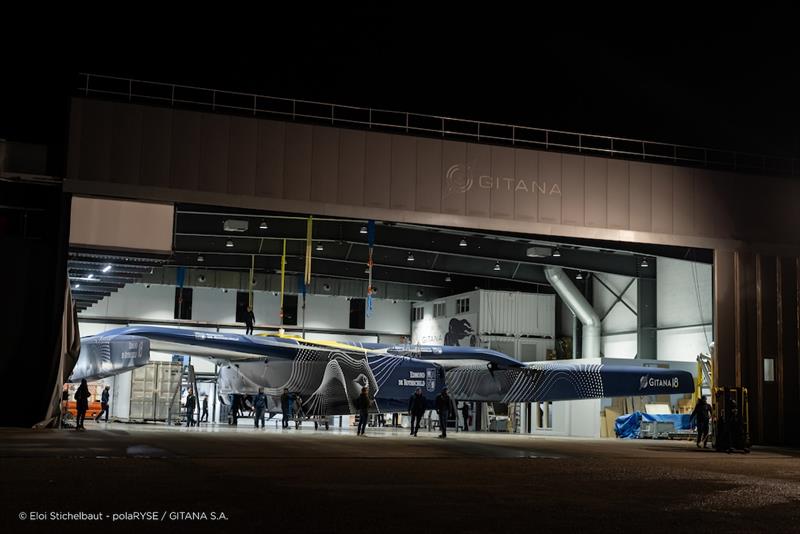
Gitana 18, the new Maxi Edmond de Rothschild © E.Stichelbaut / polaRYSE / GITANA SA
Over the past two years at CDK Technologies on the West coast of France, the most advanced offshore sailing yacht ever built has been taking shape.
At 32 metres long, 22 metres wide, 38 metres high, and with 50,000 hours of design & study, 200,000 man hours of construction by the 200 people involved in the project, the new Maxi Edmond de Rothschild trimaran will be capable of pushing the 24 hour record, which currently stands at 907.7 nautical miles, to over a thousand nautical miles, which would be averaging close to 42 knots.
Named Gitana 18, this Ultim trimaran is a radical departure from the existing generation of offshore leviathans, utilising adaptations of technologies we've seen in the smaller America's Cup, SailGP, and even the International Moth designs, and scaling them for use in the world of offshore trimarans.
No expense has been spared, and all the knowledge and experience of the Gitana and Team Verdier design offices, combined with C3 Technologies for the rudders, Re Fraschini making the foils, Southern Spars building the mast and boom, Harken deck hardware and North Sails, have come together to make this extraordinary yacht.
Speed gains of 10 to 15 percent are expected, and skipper Charles Caudrelier is aiming for perfect flight in up to 3 metres waves. On every front Gitana 18 will take offshore sailing to another level.
Under the waterline of the central hull is a T-foil centreboard, nearly 5 metres deep with a foil span of 3 metres, with the first of three U shaped rudders at the back, with the central rudder on a hinge to lift it out of the water.
The port and starboard hulls also have this unique U-shaped rudder, each with a height of 4 metres and foil span of 2 metres, all equipped with trim tabs for steering and ride height control. The port and starboard rudders lift vertically.
The port and starboard hull's Y foils look very much like those on the America's Cup AC75 monohulls, but pivot from the inboard side of hull, having a span of over 10 metres and foils nearly two and a half metres wide.
Moving to the rig, the mast has spreaders which can be raked back whilst sailing to modify the power of the mainsail - a first at this scale.
And then there is the stunning artwork by Florian and Michael Quistrebert, designed to complement and work in harmony with the radical technology.