
The Ocean Race to help collect rare data in remote areas of Antarctica
by The Ocean Race 28 Nov 2023 09:44 GMT
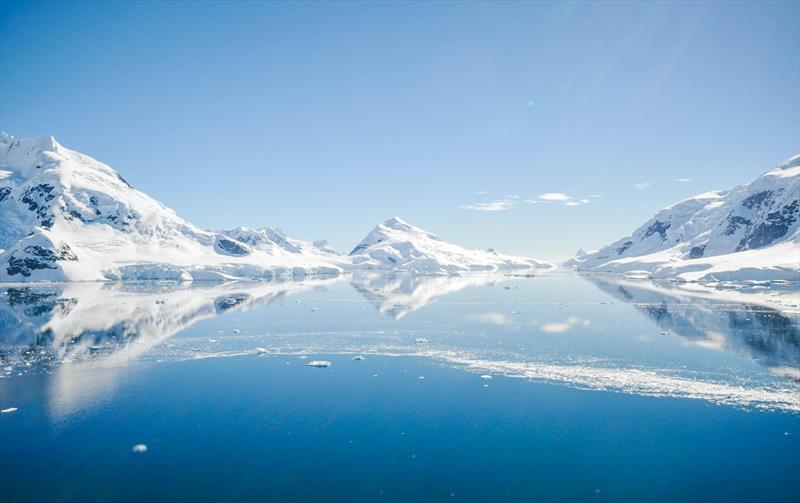
Data revealing insights into the health of the ocean will be collected from remote areas of Antarctica © Henrique Setim on Unsplash
The Ocean Race is driving an Antarctic science mission in which vital data about the health of the ocean will be gathered at the southern fringes of the planet, where information is extremely sparse.
- Locations south of 70 degrees will be tested for microplastics and to assess the impact of climate change on the ocean
- The analysis of tiny microplastics (down to 30 microns) has never been done before in Antarctica
- Antarctica and the Southern Ocean have a crucial role in regulating the world's climate and are home to keystone species* such as Antarctic krill
Specialist science equipment, which was developed for and used in The Ocean Race 2022-23 to gather over four million pieces of data on ocean health, will be used during a unique four-month expedition on a sailing yacht specifically designed for polar expeditions. Antarctic veteran and sailor Stephen Wilkins, who has visited the region 22 times, will be in charge of gathering the data and samples onboard.
The boat set sail from the Falkland Islands yesterday, and will make its way to Bellingshausen Sea in Antarctica, where it will remain amidst the ice for two months, most of the time south of 70 degrees, before heading north to Chile.
60 water samples will be captured to test for microplastics, 40 while sailing and 20 when the boat is anchored. The National Oceanography Centre (NOC), a Scientific Collaborator of The Ocean Race, will analyse the samples to determine the number and size of the microplastics as well as their chemical composition using cutting-edge analytical techniques. This will help to grow understanding about the spread and potential origin of ocean plastic. Scientists will be able to compare samples gathered on the journey to and from Antarctica with existing data to determine how levels of plastic pollution are changing. The sampling equipment will capture tiny microplastics (down to 30 microns in size), this level of analysis has never been done before in Antarctica, marking a significant opportunity to improve knowledge of the extent of plastic pollution in this remote region.
The Southern Ocean is an iconic part of the race course for The Ocean Race and a proving ground where the world's best offshore sailors test themselves in extreme conditions. The race has been contributing data to the scientific community studying the changes taking place in this remote part of the world, but this is the first time equipment from The Ocean Race has been utilised in the Southern Ocean for this purpose outside of a race.
Dr Katsiaryna Pabortsava, marine biogeochemist at the National Oceanography Centre (NOC) said: "These samples will help to better understand abundance, characteristics, sources, fate, and impacts of microplastics in the remote Antarctic region. Scientists will get a unique opportunity to investigate how microplastics are transported to the Antarctic, how they disperse through ocean depth and accumulate on the seabed. This is crucial for our understanding of the risks these contaminants pose to the unique Antarctic ecosystem."
The boat will also carry one of The Ocean Race's OceanPacks, to measure a range of ocean data throughout the four month trip, including oxygen, carbon dioxide, salinity, water temperature and atmospheric pressure. These types of data are rarely captured at such latitudes, making them highly valuable to the Race's science partners. These world-leading institutions, including GEOMAR Helmholtz Centre for Ocean Research, Ifremer and CNRS (Centre National de la Recherche Scientifique), will analyse the data as part of their research on the impact of climate change on the marine environment and to inform predictions about how the ocean will respond to climate change in future.
Stefan Raimund, Science Lead for The Ocean Race, said: "Though the ocean is considered vast and largely inaccessible, this has not protected it from the impact of human activity. With its record low levels of sea ice and the catastrophic breeding failure of emperor penguins this year, Antarctica is a clear example of this.
"Science is the most powerful weapon we have in fighting the decline of the ocean's health, which is why we are capitalising on opportunities, like this Antarctic expedition, to reveal the impact of human activity on the most remote parts of the planet. The more we know about the health of this region, which is critical to the global climate, the better it can be protected."
The Ocean Race is the only team sport in the world that requires all participants to take part in the collection of vital ocean data and the only sporting event that has a science programme that extends to external competitions (recently the Race's science equipment was used by a team in the Transat Jacques Vabre) and expeditions, such as the Antarctica trip. The Science programme, which was created with Premier Partner 11th Hour Racing, is considered particularly valuable to scientists because teams in the round-the-world Race gather information from areas of the ocean that research vessels cannot access, helping to fill critical knowledge gaps. Once analysed, the findings feed into reports and databases that inform and influence business and governments to make crucial decisions about the environment.
Race Chairman of The Ocean Race, Richard Brisius, will talk about the Science programme during the upcoming United Nations Climate Change Conference, COP28. He will be part of a line-up of speakers sharing innovative ocean climate science solutions in an Ocean Climate Spotlight session, organised by UNESCO's Intergovernmental Oceanographic Commission and OceanX.
The Ocean Race is contributing scientific data to the Ocean Decade Odyssey project, which is an endorsed Project of the UN Decade of Ocean Science for Sustainable Development (2021-2030) supporting efforts to reverse the cycle of decline in ocean health and create improved conditions for sustainable development of the ocean.
Earlier this year The Ocean Race launched a dedicated data visualisation platform for exploring the data: theoceanracescience.com.
*A keystone species is an organism that is vital to the ecosystem it is part of, playing a disproportionate role on its environment